
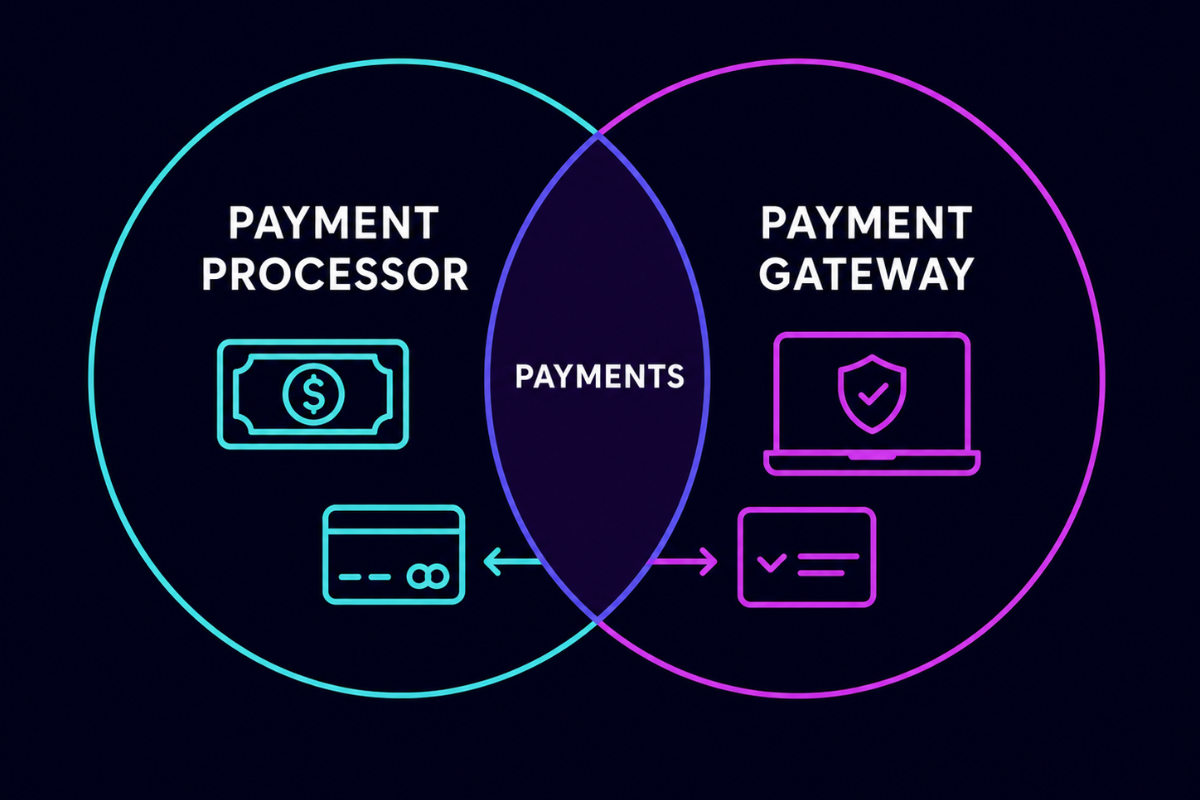
Payment gateway. Payment processor. Same thing? Not even close.
Even experienced executives can tend to use these terms interchangeably. Understanding the difference matters because each plays a distinct role in your payments strategy, customer experience, and technology stack.
Think of it this way:
A payment gateway is the secure digital front door.
When a customer enters their card information online, the gateway encrypts that data, performs initial fraud and security checks, and securely transmits the authorization request to the payment processor. It never moves money. It moves information.
A payment processor is the financial engine behind the transaction.
The processor communicates with the acquiring bank and the card brand networks, routing the transaction to the card issuer for authorization. Once approved, it facilitates settlement and ensures the funds are transferred to the merchant. In short, it handles the movement of money.
In simple terms:
- Gateway = securely transports payment data
- Processor = moves the funds
Most online businesses need both. While many modern providers bundle these services into a single platform, they’re still separate technologies performing different jobs behind the scenes.
Why should you care?
Because choosing the right combination affects far more than whether a payment is approved. It impacts checkout conversion, fraud prevention, reporting, scalability, integration with your ERP or CRM, and ultimately your total cost of accepting payments.
The stakes continue to grow. The global payment gateway market is expected to grow from $58.8 billion in 2026 to nearly $246 billion by 2033, reflecting the rapid expansion of digital commerce.
At the same time, Visa processed more than $4 trillion in payment volume in a single quarter, demonstrating the extraordinary scale and resilience of today’s global payment infrastructure.
Payments are becoming more about your technology architecture. It’s not just about getting paid.
The businesses that understand the infrastructure behind every transaction are better positioned to improve customer experience, optimize costs, and scale with confidence.
Whether you’re launching a new payment experience or reassessing an existing one, it’s worth taking a closer look at the technology behind every transaction.
If you’re exploring your options, I’d be happy to continue the conversation.