
A low processing rate looks good on a proposal. A simple monthly statement looks even better.
But how much do you actually know about what you’re paying to accept credit cards?
Payment processing isn’t a single fee. It’s made up of several components, and how your provider presents them can make a significant difference in how easily you understand, compare and manage your costs.
Three costs. One transaction.
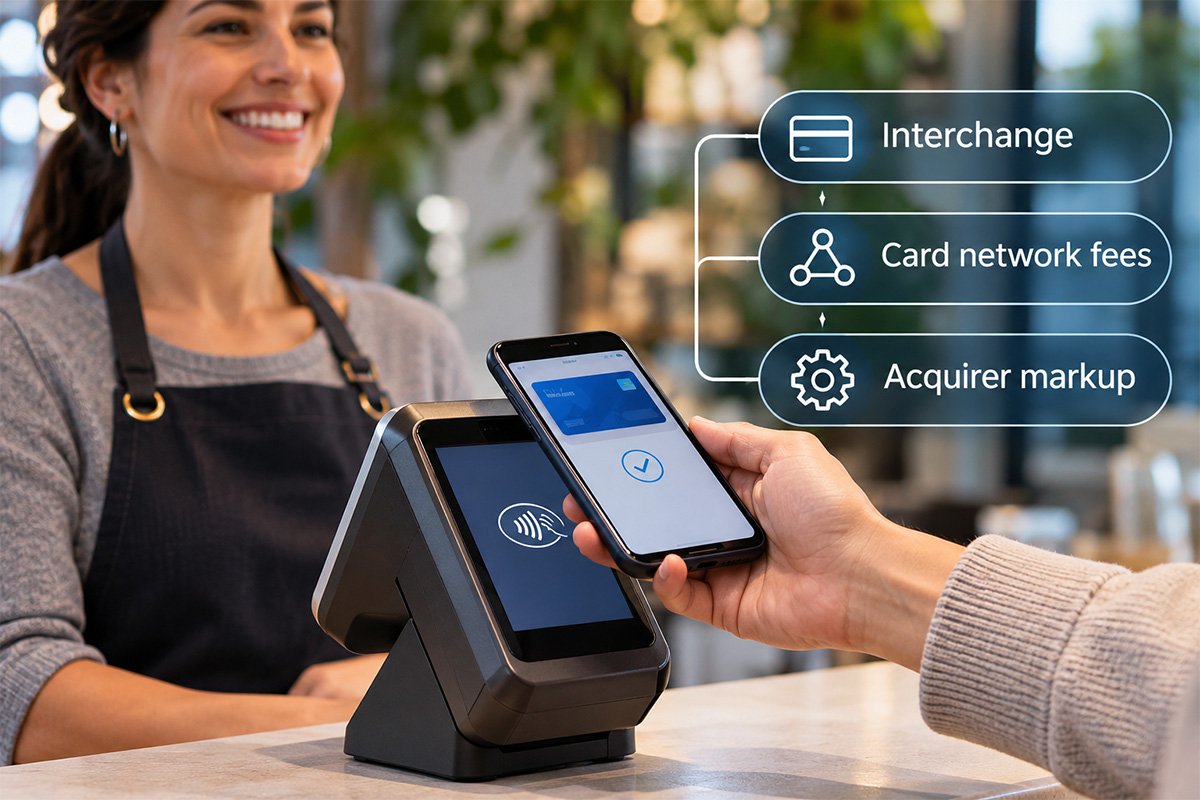
Every card transaction involves three primary cost components:
Interchange: Paid to the cardholder’s issuing bank. Visa and Mastercard establish interchange rates, which vary based on card type, transaction method and other qualifying factors.
Card network fees: Charged by networks such as Visa and Mastercard for access to their infrastructure and services.
Acquirer markup: The amount your acquiring provider charges for its services, including payment processing, risk management, settlement and the technology that connects merchants to the card networks. This infrastructure includes payment gateways, point-of-sale terminals and the systems that facilitate transactions between merchants and the card brands. This is where provider pricing and negotiation come into play.
Together, these form the core of your merchant service costs.
How your pricing model changes the picture
Not all providers present these costs in the same way.
- Bundled or flat-rate pricing: Combines costs into one rate. Convenient and predictable, but offers limited visibility into the underlying components.
- Interchange-plus: Separately identifies interchange, network fees and acquirer markup, providing greater cost transparency.
This isn’t just a question of preference. It affects your ability to identify opportunities and negotiate better terms.
According to the Federal Reserve Banks’ 2024 Small Business Credit Survey, 52% of U.S. employer firms identified payment processing fees as a business challenge. In retail, that figure climbed to 69%.
And these costs aren’t standing still. In April 2026, payments consultancy CMSPI (Card & Payments Solutions International) estimated that changes to card network fees could add US$3 billion in costs for U.S. merchants. New fees, revised fee structures and changes to existing programs are making payment pricing increasingly complex.
A transparent pricing model doesn’t automatically guarantee lower fees. And a low advertised rate doesn’t necessarily mean a lower overall cost.
The important questions are simple: Can you identify what you’re paying? Which costs are set by the card networks, and which are controlled by your provider? Are you paying additional fees beyond your agreed pricing?
At Cartis Payments, we believe merchants should understand where their money goes and have the information to make better decisions.
Reach out to our team for a review of your processing statement. We’ll help break down your costs, assess your pricing structure and identify opportunities to improve your payment economics.